









-
What is melanoma and how is it different from other skin cancers?
Melanoma arises from melanocytes and is biologically more aggressive than basal cell or squamous cell carcinoma, with a greater capacity to spread through the lymphatic system and bloodstream to distant organs. Early detection and treatment are critical — survival rates for early-stage melanoma are excellent, but decline significantly once the disease has spread.
-
What are the warning signs of melanoma?
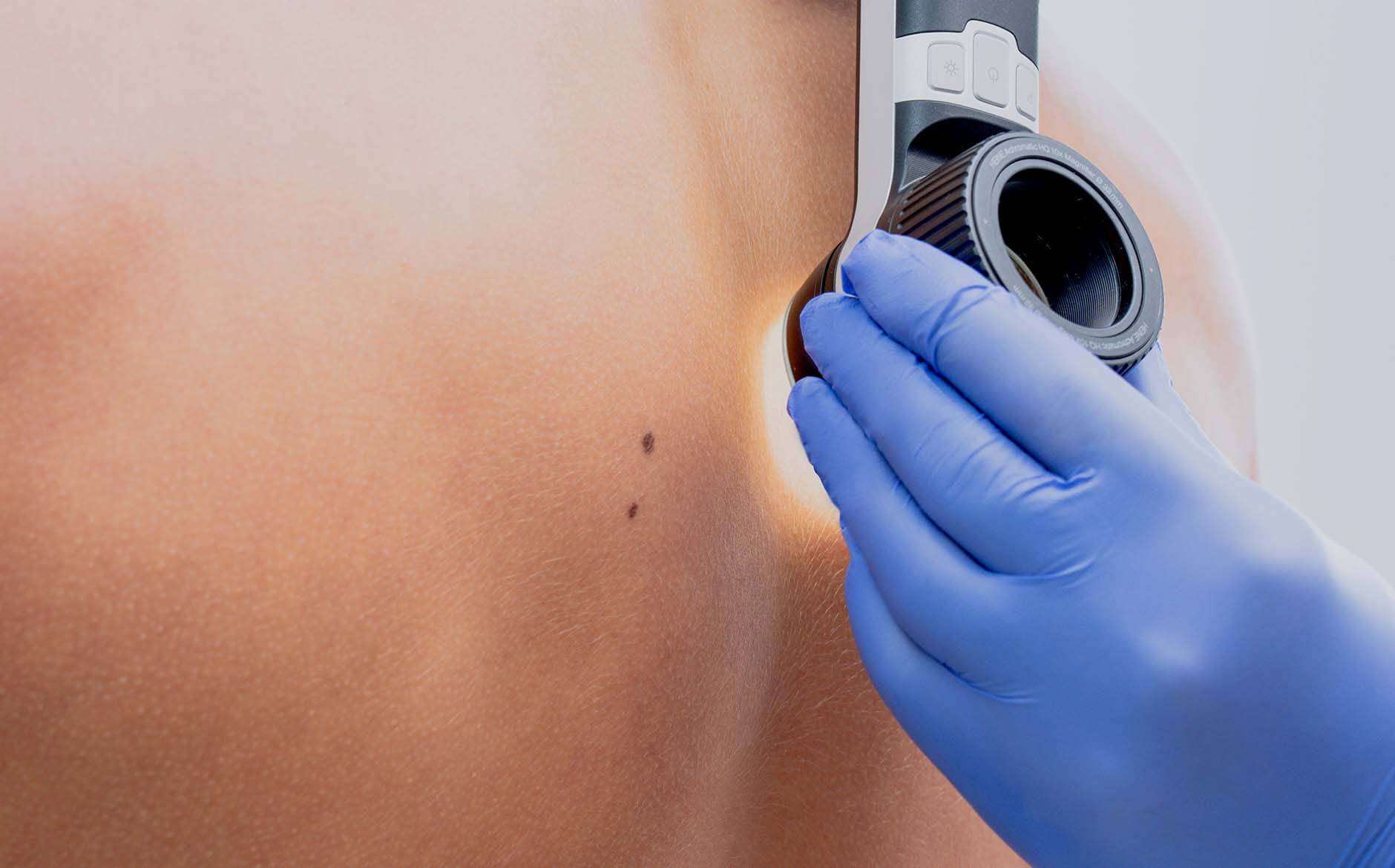
Use the ABCDE criteria: Asymmetry, irregular Border, multiple Colours (brown, black, red, white, or blue), Diameter greater than 6mm, and any Evolving change in size, shape, colour, or new symptoms such as bleeding or itching. Any changing or new lesion should be assessed by a dermatologist promptly.
-
Who should be seen urgently?
Anyone with a lesion that has changed rapidly, that bleeds without trauma, or that a clinician has already identified as suspicious should be seen urgently. Patients with a confirmed melanoma diagnosis awaiting surgery should be prioritised for early operative planning.
-
What is a sentinel lymph node biopsy?
Sentinel lymph node biopsy (SLNB) is a minimally invasive procedure that identifies and samples the first lymph node draining the melanoma site. If melanoma cells are present in the sentinel node, it indicates potential spread and informs decisions about further treatment. SLNB is recommended for melanomas of Breslow thickness 1mm or greater.
-
What happens if the melanoma has spread?
If sentinel lymph node biopsy confirms lymph node involvement, or imaging identifies distant spread, treatment moves from surgery alone to a combination of surgery and systemic therapy. Modern immunotherapy and targeted therapy drugs have significantly improved outcomes for patients with advanced melanoma.
-
What are the long-term follow-up requirements?
Regular follow-up is essential following melanoma treatment. Frequency and duration depend on the stage of the disease. Early-stage melanomas are typically followed for 5 years with annual skin checks. Higher-stage disease requires more intensive surveillance. Patients are taught self-examination techniques and advised on sun protection measures.
Your Patient Journey
1. Your
Consultation
Your surgeon will review any existing biopsy report, examine the primary site and regional lymph nodes, and arrange any further imaging or staging investigations required. The surgical plan — including excision margins, closure technique or reconstruction, and the role of sentinel lymph node biopsy — will be explained clearly. A personalised treatment plan is agreed before consent is obtained.